
Gas Services for an Engineering City
Coventry has moved from watches to bicycles to cars, and is now moving into batteries, electric vehicles and advanced engineering. Research and test facilities sit at Whitley and Ansty Park. Suppliers and machine shops fill Binley, Holbrooks and Bayton Road. Large distribution buildings stand at Ryton and Middlemarch Business Park.
Each change leaves its mark on the gas pipework. New test cells and curing ovens need new supplies. Old production lines are stripped out and their pipework has to be made safe. Buildings change from manufacturing to storage and need a different kind of heating.
That mix of installing, altering and removing is the core of what we do.
Services at a Glance
- Commercial gas pipework installation
- Strength and tightness testing
- Direct and nitrogen purging
- Gas commissioning
- Gas decommissioning and capping
- Gas safety inspections and certificates
- Catering pipework
- Warehouse and workplace heating
How New Pipework Is Tested
The strength test comes first, above operating pressure, to show that joints and fittings can take the load. The tightness test follows and shows whether the system leaks. IGEM/UP/1 and IGEM/UP/1A are the standards used. See gas testing and purging.
Heating Warehouses and Workshops
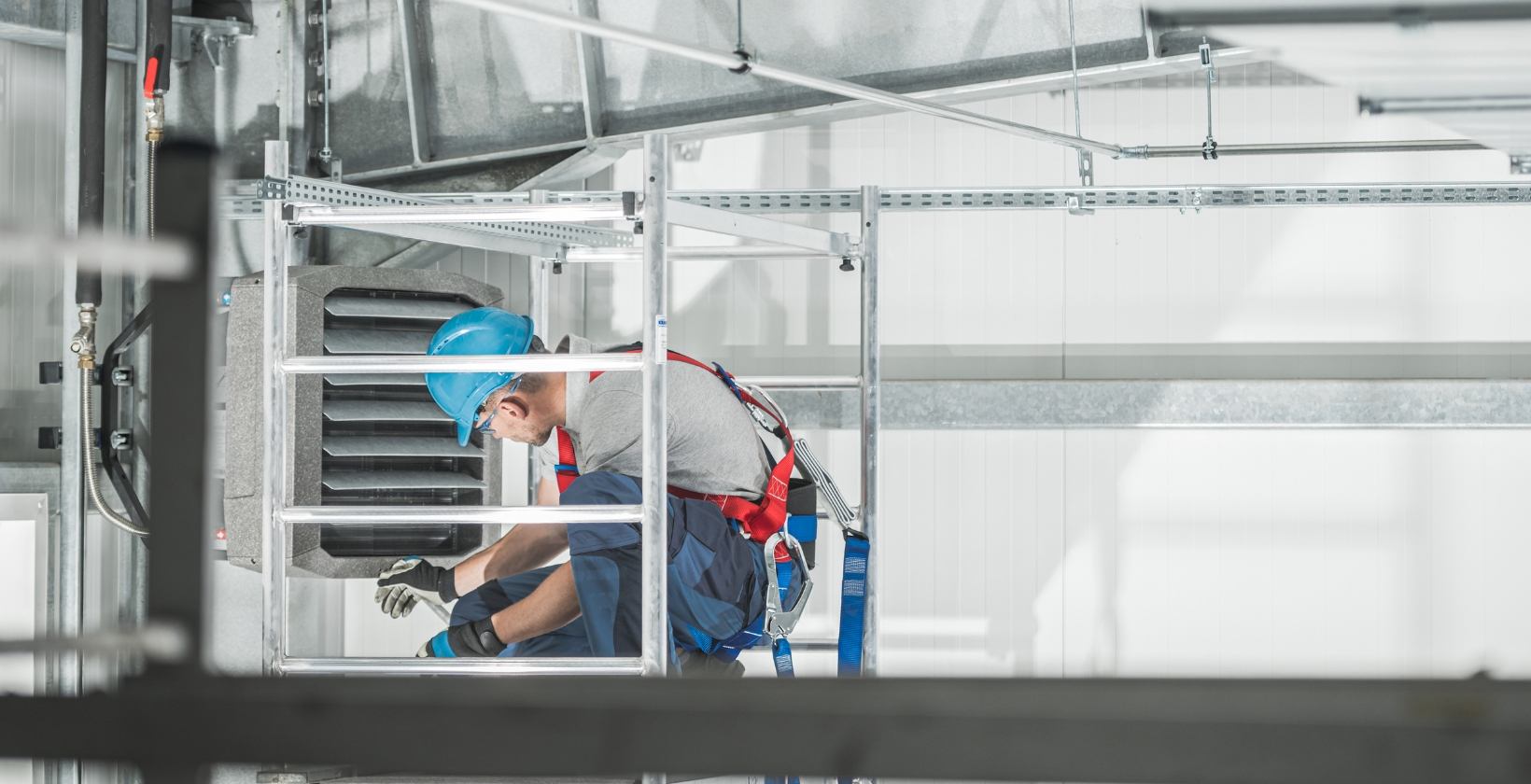
Radiant tube heaters suit buildings with dock doors opening all day. Warm air heaters suit closed workshops. Both need pipework sized for the full load and supported properly at height, and the work is best done in summer.
Buried Mains Between Buildings
Polyethylene is used below ground only and changes to steel before it surfaces. New sections are tested and purged so the rest of the site stays on. See underground gas pipework.
Catering Gas and Certificates
Kitchen pipework to BS 6173 and annual gas safety inspections for restaurants, canteens and campus kitchens across Coventry.
Gas Decommissioning Before Redevelopment
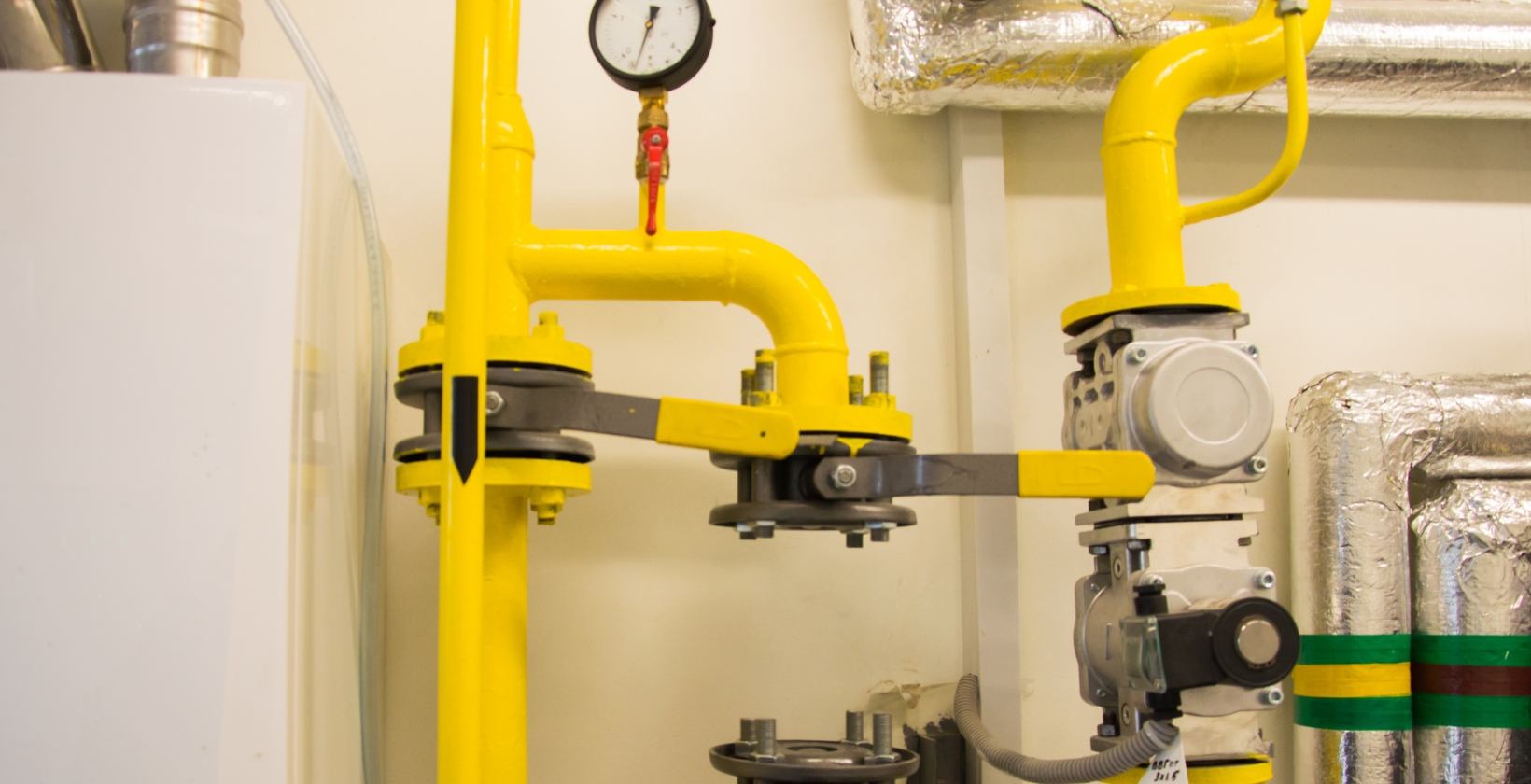
When a factory closes or a unit is refitted, the gas installation must be dealt with before anyone starts cutting. Pipework that looks dead may still be connected. Nothing is assumed safe until it has been isolated, purged and proved.
The section is shut off at a valve that can be locked. The gas is displaced with air, or with nitrogen on larger systems, and vented outdoors until a detector confirms the pipe is clear. Open ends are capped, the pipework is labelled, and you receive a record of what has been decommissioned.
The city centre is going through major redevelopment, and the same steps apply to shops, offices and leisure units being cleared for demolition.
Who Do We Work For?
Engineering and Automotive Suppliers
Process supplies for ovens, test cells and paint plant, usually altered in planned shutdowns.
Logistics and Distribution
Tall sheds along the M6, M69, M40 and A45 that need efficient heating before winter.
Universities and the Hospital
Two universities and the teaching hospital at Walsgrave, with central boiler houses, long mains, kitchens and laboratories. Gas proving systems in teaching rooms are covered by IGEM/UP/11.
Restaurants, Shops and Leisure
Kitchens that should meet BS 6173, with an interlock that shuts off the gas if the extraction fails.
Why Choose Our Coventry Gas Engineers?
We work only on commercial and industrial gas pipework, and we are Gas Safe registered under number 568617. Records of each test and purge are issued to you. On larger projects they usually form part of the handover file, and insurers may ask to see them after a change to the installation.
We work seven days a week, and we deal with business owners, main contractors, facilities managers and commercial landlords across Coventry and Warwickshire. Quotes are free. For larger jobs we survey the site first, and we are happy to work from drawings at design stage.
Emergency Call Outs
Most of our work is planned in advance, but faults do not wait. If you smell gas, call the National Gas Emergency Service on 0800 111 999. If it is safe, shut off the gas at the emergency control valve and open doors and windows while you wait. Once the site is safe, our engineers attend at any hour.
We trace the leak, repair it, and carry out the test and purge needed before gas is restored. See emergency gas repairs.
Safety, Standards and Local Authorities
The Gas Safety (Installation and Use) Regulations 1998 put a duty on employers to keep pipework and appliances safe. An annual inspection is the accepted way of showing that. Tightness testing and purging follow IGEM/UP/1, and records of each test should be kept with your other safety documents.
Coventry City Council is the highway authority for the city. The surrounding area, including Kenilworth, Rugby, Nuneaton and Bedworth, comes under Warwickshire County Council. Ansty Park, Ryton and Bayton Road all sit close to the boundary, so it is worth confirming which council applies before planning work near a public road.
The gas distribution network in the West Midlands is operated by Cadent. New supplies, meter upgrades and disconnections are arranged with Cadent or your supplier.
Where We Work Around Coventry and Warwickshire
We cover the full CV postcode area. Within the city that means CV1 to CV6, including Walsgrave (CV2), Binley and Whitley (CV3), Canley and Tile Hill (CV4) and Holbrooks and Foleshill (CV6). Ansty and Exhall are in CV7, and Kenilworth, Baginton and Ryton are in CV8.
Further afield we cover Atherstone (CV9), Nuneaton (CV10 and CV11), Bedworth (CV12), Rugby (CV21 to CV23), Leamington Spa (CV31 and CV32), Warwick (CV34) and Stratford-upon-Avon (CV37). We also work in Birmingham, Solihull, Leicester and across the UK, so a site just outside these postcodes is still covered.
Discuss Your Site With Us
If you are installing new plant, clearing a building or reviewing gas safety at a site in Coventry, call 08000 855 077 or send an enquiry. Tell us what you need and we will provide a free quote. You are under no obligation.