
This page explains what commercial gas installation covers, the types of installation we carry out, how long the work takes, the problems we see most often on commercial gas pipelines, and why routine maintenance matters.
What Is Commercial Gas Installation?
Commercial gas installation is the fitting of gas systems in commercial buildings. A qualified gas engineer carries out each stage, working to the relevant industry standards.
Our work ranges from gas line installation to sizing gas meters correctly, so that the supply matches what your appliances draw when they are all running.
We work only on commercial and industrial systems, and we are Gas Safe registered under number 568617.
Why Have Us Install Your Commercial Gas System?
We look after the whole job, from the first survey to the final checks. Pipe sizes, routes and materials are agreed with you before any work starts.
Working to the standards keeps disruption short, because the installation passes its tests first time and appliances can be commissioned without delay. The result is a supply you can rely on and paperwork that shows it was done properly.
Types of Commercial Gas Installation We Carry Out
We install heating systems, boilers and specialised equipment such as gas catering appliances. The pipework that feeds them is part of every job.
Gas heating keeps commercial buildings warm at a reasonable running cost. Different boiler types suit different hot water and heating loads. Correct pipework matters for both, because an undersized or badly routed supply will starve the appliances at the end of the run.
Gas Heating Systems
Gas heating for commercial buildings usually means boilers, warm air furnaces or infrared heaters. Boilers distribute heat through radiators or underfloor systems. Furnaces heat quickly through air distribution. Infrared heaters suit large open spaces because they warm people and surfaces directly.
All of them need routine maintenance to stay safe and efficient.
Gas Boilers
Commercial gas boilers provide heating and hot water for many businesses. Floor mounted, wall mounted, modular and condensing boilers each suit a different space and capacity.
Correct installation and regular servicing keep a boiler safe and efficient, and regular checks catch small faults before they become expensive repairs.
Gas Pipework
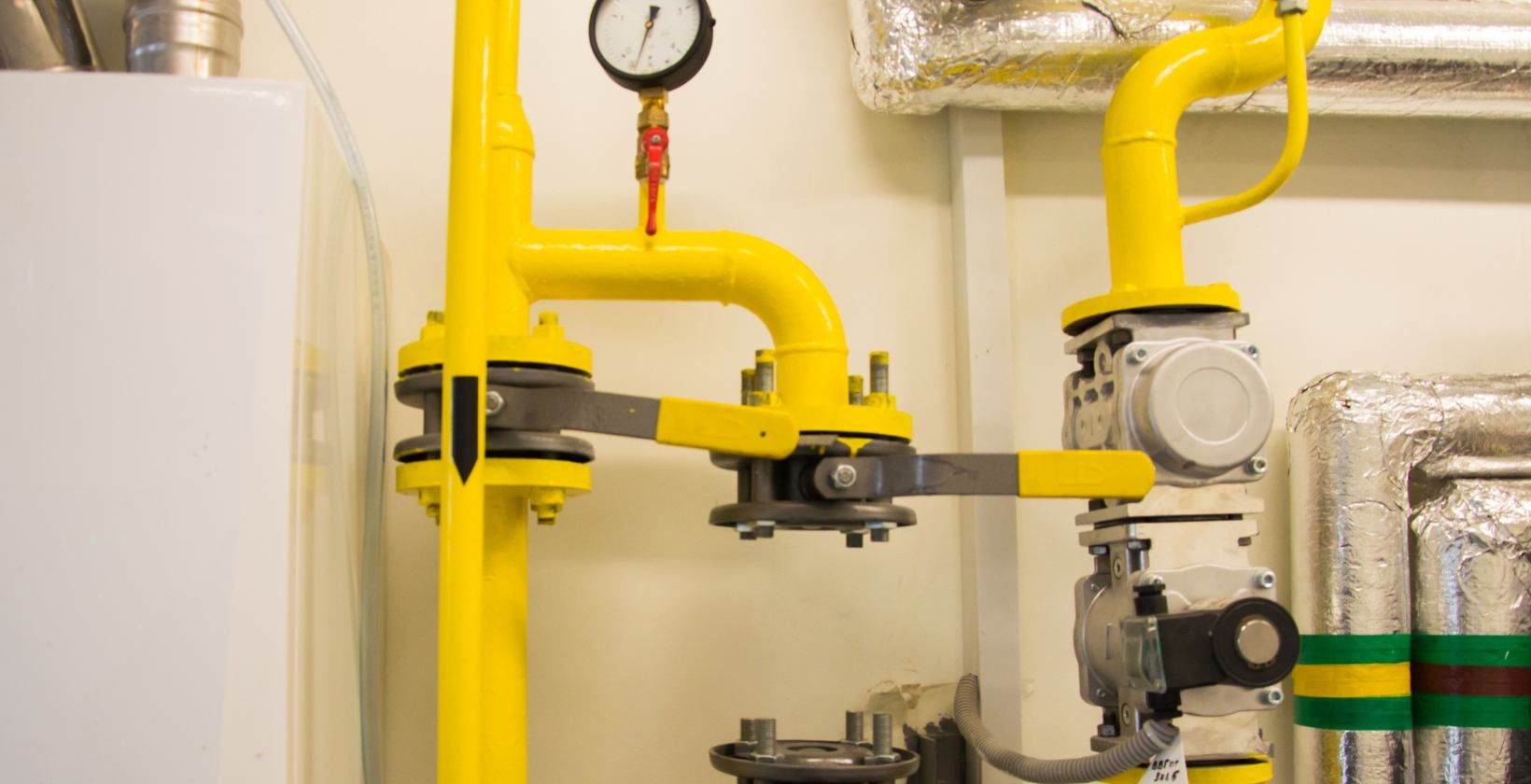
Pipework carries the gas from the meter to the appliances. The right pipe size and material keep the flow steady and stop pressure dropping under load.
Steel, polyethylene and copper are the usual materials, each with its own place. Steel and copper are used above ground and polyethylene below it. Good installation practice makes the system safer and easier to maintain.
Gas Catering Equipment
Commercial kitchens run on gas ranges, ovens and grills that work hard for long hours. The installation needs proper ventilation and a gas supply that can feed every appliance at once.
Catering installations have their own safety rules, including an interlock that shuts off the gas if the extraction fails, and we install the pipework side to meet them.
How Long Does a Commercial Gas Installation Take?
It depends on the size of the job. A single appliance connection can be done in a visit. A new plant room or kitchen takes longer and is usually planned into a wider programme.
We start with a survey of what you need and set out a timeline. Our engineers then install the pipework, test it, purge it and commission the appliances. The final checks confirm that everything works and that the installation meets the standards.
Common Problems With Commercial Gas Pipelines
The faults we see most often are leaks and loss of pressure. Corrosion, poor original installation and alterations made over the years are the usual causes.
We deal with them through repairs and planned maintenance. Regular inspection finds corrosion and loose joints early, while they are still cheap to put right.
Why Routine Maintenance Matters
Gas pipework that is inspected regularly lasts longer and is far less likely to fail without warning. Inspections and prompt repairs prevent leaks and keep you within the safety regulations.
A well maintained system also runs more efficiently, which shows up in the gas bill. We offer planned maintenance for the installations we fit and for existing systems.
Arrange a Free Consultation
If you are planning a commercial gas installation, we will visit the site, look at what you need and give you clear advice on the best approach, along with a written quote.
There is no charge for the consultation and no obligation. We are also here for the maintenance and changes that follow.